
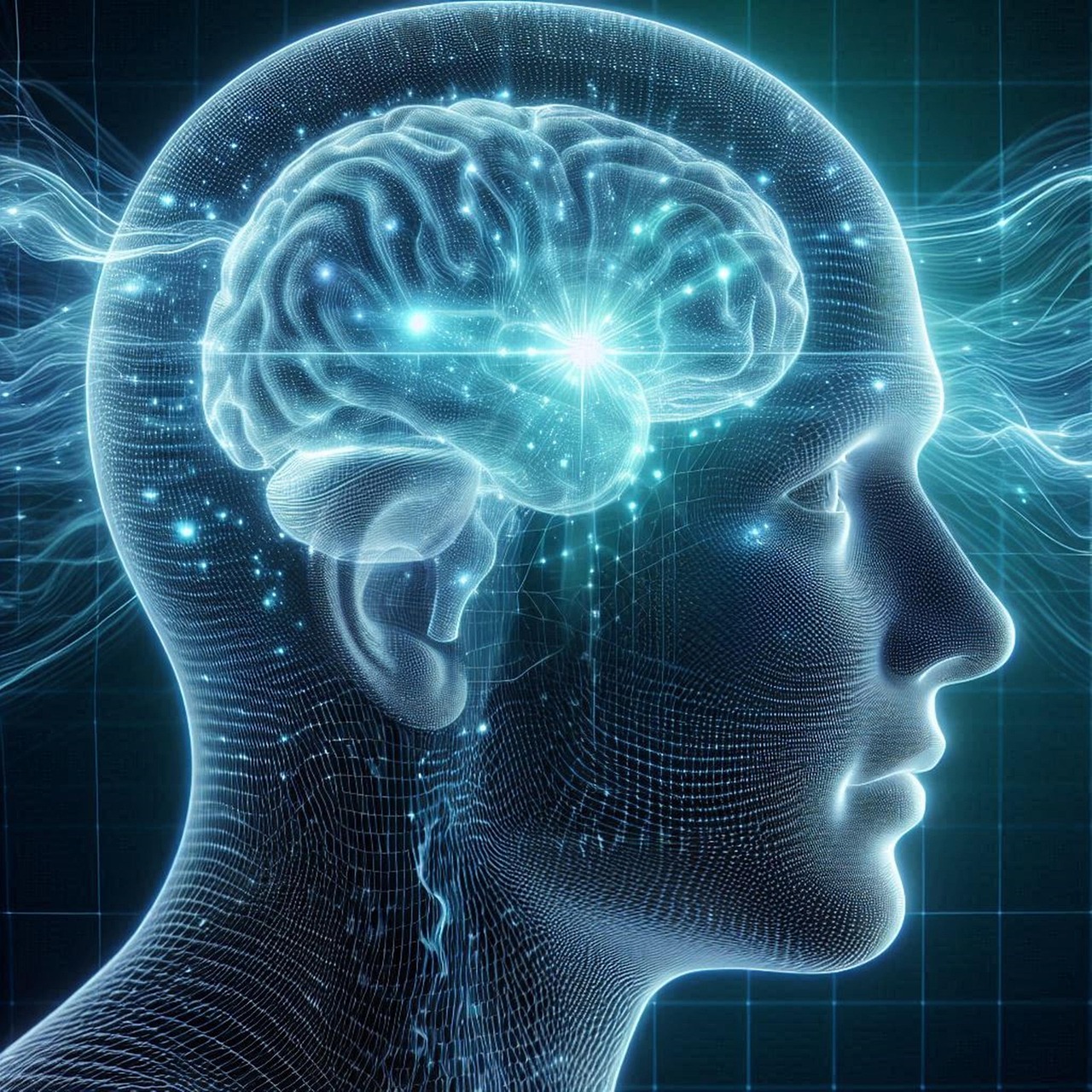
I am personally fascinated by how our brain and body work - and how we can positively influence them to improve our lives. In this blog, I share a short and simplified summary of the functions involved in triggering or maintaining us in a calm (rest-digest) or a stress (fight-flight) state.
Jump to the section you'd like to explore: External stimuli is received | Internal stimuli is received | Directors' profiles | Processes triggered | Modern lifestyles | How to stop the stress cycle
Calm vs stress states: what happens in the brain and body
Even though I am not a doctor or a medical professional, anything related to the brain and mindset fascinates me. After practicing EFT personally for years and also becoming a certified professional, I know tapping positively influences our brain, the body and ultimately, our lives. And that’s not just my personal experience - there is a growing body of research that indicates EFT alters our emotional state as well as our physiology.
But sometimes, when biological terms are mentioned, it may not be easy to make a clear connection between them or truly understand how everything relates. So I decided to write this blog to share more about how our brain functions.
Important note: The brain, along with our neurological and physical processes, is extremely complex, and therefore this is an purposely oversimplified perspective. My goal here is for you understand what’s happening inside and how EFT helps support these processes. I am to highlight the most practical and relevant aspects related to this topic. I am not a medical professional, so further reading and research is recommended.
In this blog, I will explore more about the brain and body functions. How EFT tapping positive influences will be explored in more depth in the next blog.
Let’s imagine…
That the whole system is a complex of buildings.
When an external stimulus is received
Just on the perimeter, there are sensory organs - these are the watchers. They are always observing what is happening outside the complex.
Each is responsible for one specific area. The Eyes are focused on the visual information, the Tongue is directed towards taste, and the Ears towards sound. The Skin notices any physical sensations, such as touch or temperature, while the Nose perceives smells.
They all send individual reports to a building called the Limbic System - this is a group of brain structures involved in memory, threat detection, motivation and emotional processing.
In this building, the first ones to receive the reports are the External Stimuli Distribution Directors - there are two.
One is called Olfactory Bulb, which receives the reports related to smell, and the other is named Thalamus, which receives the reports from all other sensory organs.
Their responsibility is to pass the information received (which is usually raw and low resolution) to other different departments/functions.
Within the same Limbic System building, the reports go to:
→ The Survival Assessment Director, called the Amygdala.
This Director holds an extremely important function, as the name suggests. The Thalamus has a direct short and quick access route to share reports called Low Road. The Olfactory Bulb has its own dedicated channel. This Director, however, also receives reports from a wide range of other departments - so it can easily be overwhelmed and, sometimes, overreactive ('better safe than sorry' attitude).
→ The Library Director, called the Hippocampus.
When this Director receives the report from both, Thalamus and Olfactory Bulb, it looks through its index cards of archived memories to check whether that information matches any of them. Without much delay or analysis, it sends whatever it finds to the Survival Assessment Director and to the Sensation Packaging Director, called the Entorhinal Cortex (which sits in another building).
→ The Hypothalamus is also in the same building, and it’s the Physical Survival Director.
It has the control over two nervous systems which allows us to either enter fight-flight or rest-digest mode.
The External Stimuli Distribution Directors also send the raw information to another building, called Cerebral Cortex, via the High Road.
This building is very complex, filled with departments and interconnected functions. But the ones to consider here are:
→ There are a few Sensation Directors and each has its own role.
For example, the Visual Sensation Director, called Occipital Cortex, is responsible for receiving the report from the Eyes. Once the report is received, it will improve its resolution, look through its vast library of visual memories for any matching data and send it to the Survival Assessment Director and to its fellow department the Sensation Packaging Director (who will send it to the Library Director).
The same process happens for the:
Auditive Sensation Director, the Temporal Cortex
Physical Sensation Director, the Parietal Cortex;
Gustatory Sensation Manager, the Gustatory Cortex, which sits under the Insula, Taste Sensation and Body Sensations Director.
The Piriform Cortex, the Smell Sensation Director, receives the information from the Olfactory Bulb and acts just as the other departments.
→ Both External Stimuli Distribution Directors also send the reports to the Prefrontal Cortex, this is the Logic, Analysis and Conclusions Director.
This one has direct access to the Survival Assessment Director, the Library Director and the Physical Survival Director.
→ Another important department to mention is the Taste Sensation and Body Sensations Director, the Insula.
This Director is responsible for noticing our inner sensations - the butterflies in the stomach, the tightness in the chest. It also reports directly to the Survival Assessment Director, the Library Director and the Physical Survival Director.
This is a (0ver)simplified view of what first happens when an external stimulus is received.
When an internal stimulus pops up
Let’s now quickly jump to internal stimuli - when nothing around us is unfamiliar or dangerous.
Scientists have found that our brain activity never stops. Even when we are relaxing or idle, the brain continues to function. One of the functioning processes is called the Default Mode Network- acting as the Daydreaming, Memory, and Inner Narrative team. This is composed by a few members, but the two main departments are:
Inner Thought Director, the Medial Prefrontal Cortex, which is responsible for being the inner narrator of memories and facts.
Film Editor Director, the Posterior Cingulate Cortex, which is responsible for creating the mental scene.
It’s said that when you are simply sitting on the sofa for example, even without any other stimulation, the Default Mode Network is active, supporting self-reflection, memory and internally focused thinking.
These Directors therefore can bring up memories, facts, ideas from ‘inside’ - without any external cue. These reports are then shared with the same Directors as the reports from the External Stimuli Distribution Directors - causing the same chain of processes.
What are the processes then, after each Director receives the reports?
Each director’s (short) job description summary
Survival Assessment Director = Amygdala
The Survival Assessment Director (Amygdala) is a key one here. Besides receiving information from each of the Directors above, it also receives information from the Basic Body Survival Director, the Brainstem. Therefore, it’s always working.
Its mission is exactly as the title describes: survival. It has its own high-intensity emotional archive, and every time it receives a report, it runs it through a pattern-matching process to detect possible danger or safety.
This Director responds to memories, imagined scenarios and physical sensations as if they represent a current threat, particularly when they carry a strong emotional charge.
Whatever the conclusion - which is sometimes rushed because it operates on a 'better safe than sorry' attitude - it sends a message to the Physical Survival Director, the Hypothalamus, letting it know whether everything is ok or whether there is danger.
Library Director = Hippocampus
The Library Director (Hippocampus) receives the reports and besides sending its added-on version to the Survival Assessment Director (Amygdala) itself, it also informs the Cerebral Cortex building - via the Sensation Packaging Director, Entorhinal Cortex and the Logic, Analysis and Conclusions Director, Prefrontal Cortex - about its index information, so they can retrieve the full past memory for analysis.
This Director is also responsible for holding temporary memory - what’s happening at the moment - and then for pressing the ‘save’ button for the memory to be archived.
This process of saving the memory is called Memory Consolidation. The memory is stored in the Cerebral Cortex Building, fragmented by sensory fields (for example, the Visual Sensation Director retains the visual information of a scene or memory, while the others store their own sensations).
Logic, Analysis and Conclusions Director = Prefrontal Cortex
The Prefrontal Cortex is the Logic, Analysis and Conclusions Director. As the title indicates, it’s responsible for analysing any information received and making conclusions about it.
The full report (which can take microseconds longer than the assumptions reached by the Survival Assessment Director) is sent to the Library Director (the Hippocampus) and also, it is sent to one of two departments, depending on the conclusion of the report:
If the conclusion is ‘there is danger’, it will send it to the Survival Assessment Director (Amygdala) - so this Director can activate the necessary chain for survival.
If it is ‘everything is ok’, it will send the report directly to the Anterior Secretary of the Hypothalamus, the Physical Survival Director - to indicate no panic procedure needs to be initiated or maintained.
Physical Survival Director = Hypothalamus
Hypothalamus, the Physical Survival Director, receives reports from different departments and depending on the conclusion between safe or unsafe, it will engage one of its secretaries to help coordinate the body’s response through the Autonomic Nervous System and hormonal pathways.
The Autonomic Nervous System includes the Sympathetic Nervous System, often associated with fight-or-flight, and the Parasympathetic System, often associated with rest and recovery.
The Anterior Secretary will receive reports when there is no threat, while the Posterior Secretary will get alerted when danger has been observed.
Processes triggered by the Physical Survival Director, following conclusions of safety or danger
If everything is ok, there is no danger and we can feel calm
If there is danger, our survival is at threat, we need to be ready
The Physical Survival Director will engage its Posterior Secretary who will communicate with the Basic Body Survival Director, the Brainstem, to activate the Sympathetic Nervous System.
The protocol here is fight or flight.
It will do two things:
Send electrical signals via the spinal cord to the internal organs to warn them of the danger.
Involve the Endocrine System through the hypothalamic-pituitary-adrenal (HPA) axis. This means activating the Pituitary Gland, which communicate with the Adrenal Glands, which in turn release the hormones Adrenaline and Cortisol, as chemical messengers to the internal organs.
What happens now?
This is the body's high-alert mode. The message is essentially: “Something may be unsafe. We need to be ready.”
Therefore:
- Our heart rate and blood pressure shoot up, to pump blood to the limbs → we may need to fight or run
- Digestion is reduced and immune activity can be altered and downregulated → the body prioritises resources for immediate action.
- Our ability to think clearly, analyse information and make deliberate decisions can become impaired → the brain prioritises rapid responses over slower, more considered thinking.
Swinging between the two conclusions (unsafe → safe → unsafe → safe)
As mentioned, the Survival Assessment Director (the Amygdala) operates on a 'better safe than sorry' policy. Because it relies on reports from a wide range of departments - some of which are vague or incomplete - it can quickly default to panic mode.
One example is the fast-tracked alerts received from the Thalamus, one of the External Stimuli Distribution Directors. It uses the 'Low Road', meaning they arrive well before the data from the Logic, Analysis and Conclusions Director.
This is exactly why we jump when we spot a long, coiled object on the floor; our survival instincts instantly scream 'snake!' seconds before our other Directors can calmly conclude it is just a piece of rope.
Ultimately, our body is incredibly clever to swing between safe and unsafe as it gathers more data and reaches a final conclusion.
Process in action in modern lifestyles
When there is physical or real danger, this survival process is fantastic.
Our ancestors for example faced several physical dangers: a tiger, a snake, a storm. This system worked beautifully to ensure our survival. Once the tiger was gone, we’d returned to the calm, relaxed state of normal body functions.
Modern lifestyles, however, have changed this dynamic. Although most of us no longer need to face a real tiger, we are exposed to a vast number of triggers that can be initiated physically or internally.
A gentle note: The neurological processes explored throughout this blog are shared simply as a tool to help you understand what is happening beneath the surface of your skin. By learning the language of your brain and body, you can better recognise these automatic survival loops and actively empower yourself to interrupt, shift, or change them. Your nervous system is not broken - it is simply trying to keep you safe. These deep physical responses can be gently soothed, and in the next sections, we will explore practical, proven ways to do exactly that.
Example 1: Everyday life events
You receive an email.
The Sensory Organs send the information (the sender's name or its content) to the Thalamus which forwards it to the other areas.
The Hippocampus spots a match from the past and sends this info to both, the Amygdala and the Prefrontal Cortex.
The Amygdala detects similarities between this situation and other experiences that were associated with threat, like a previous email from this sender or an email with this type of content which meant a threat - it instantly sounds the alarm.
The Prefrontal Cortex tries to analyse it, but agrees: 'This looks like the social threat from last time!'.
It fails to veto the alarm, letting the Amygdala message the Hypothalamus.
The Hypothalamus activates the Sympathetic System, releasing Cortisol and preparing you as if this was a life-threatening situation - while you are just sitting at your desk, with no physical danger.
Now your body is flooded with stress hormones, your organs respond accordingly, by shutting down the immune and digestive systems, and you can no longer ‘think clearly’ because that system is also reduced.
Example 2: Events out of our control
You are sitting on the sofa, watching TV.
Example 3: Imperceptible environment or physical changes
Your Sensory Organs are scanning for all types of sensation - consciously or unconsciously.
It’s possible that they notice something you weren’t fully aware of and send it as a report.
For example, you slouch on the sofa, slightly compressing your chest. It can detect shallow breathing and send the information of ‘something is wrong here’.
Example 4: Events from memory or imagination
You are making a cup of tea and your mind brings up the discussion you had with your boss two years ago.
Not a pleasant moment. Maybe at the time you felt stressed and that emotional charge is still attached to the memory.
That will be passed to the Amygdala, which sends the signal as ‘we are in danger, now!’ (because it doesn’t understand timelines) and the chain reaction will get started.
How to stop the unnecessary stress process?
We can intervene in many ways to stop the chain reaction of stress.
EFT Tapping: This is my personal favourite. It works beautifully with a range of departments and can offer long-term definitive changes. I will explore in depth how EFT influences the departments and processes described above in the next blog. I also wrote several other blogs, available in the Articles section, about what EFT is, what the tapping points are, how to tap, and more.
Slow breathing: When you take slow belly breaths, you activate the Vagus Nerve - and this triggers the Parasympathetic Nervous System, forcing the departments to stop sending danger warnings.
Havening: These are somatic techniques that engage the physical sensations of the body. The receptors perceive this as calming information and prioritise over the other information that they have received.
Rationalising and concluding everything is ok: This is not always easy to do, especially when the Logic department is switched off under stress. However, if it’s active, it has direct access to the Amygdala and the Hypothalamus - and is able to send signals that there is no need to panic and help stop the chain reaction.
Natural decay: Adrenaline naturally breaks down in your bloodstream within about 20 to 60 minutes. As the liver clears the stress hormones and your breathing settles, the Insula (the Body Sensations Director) logs these changes and files a 'calm body report,' allowing the Amygdala to gradually lower its guard.
Do you know any other techniques?
If you enjoyed this blog, know of any other techniques that I can add here, or want to learn more about EFT tapping, I’d love to hear from you.