

Living abroad or travelling frequently brings exciting experiences, but it also requires a strong inner sense of stability. When the external environment constantly changes, what helps most is developing a grounded inner state. Therapy can support you in navigating uncertainty and building emotional resilience while living a mobile lifestyle.
Jump to the section you'd like to explore: Decision fatigue while travelling | Fear of unknown & uncertainty | Anxiety about a non-linear life path | What EFT tapping therapy is | About me
Direction & Decision-Making: Finding your path while living a mobile life
- What’s next?
- Where should I go next?
- Am I making the right decisions?
Decision fatigue while travelling
Travelling is amazing when you are present in the moment - visiting a beautiful place, attending an event, seeing a location you once saw in a movie or online.
But what people rarely talk about is everything that happens before those moments.
Planning, researching, choosing destinations, organising logistics and making countless decisions. Social media usually shows the highlights of travel, but not the mental effort behind the scenes.
When you live abroad or have a nomadic lifestyle, decision-making becomes part of everyday life. You may be deciding:
where to live next
which neighbourhood to choose
how long to stay
how to organise work and travel
how to manage finances in different places
For solo travellers or digital nomads, these decisions often fall entirely on your shoulders.
Over time, this can lead to decision fatigue - a mental exhaustion caused by constantly having to choose. And that’s okay. It’s completely possible to love this lifestyle and still feel tired from making so many decisions.
Therapy offers space to process these feelings and develop ways to approach decisions with more clarity and less pressure.
Fear of unknown & uncertainty
Anxiety about a non-linear life path
Closely connected to the fear of the unknown is something many travellers and expats experience: anxiety about not having a predictable path ahead.
With the best intentions, people often ask questions like: “What’s next?” “Where do you see yourself in five years?” When I told my mum that I was going to travel again after already living a nomadic lifestyle for a couple of years, she asked me: “Are you doing this forever?”
Questions like these come from a place of care, but they can also create pressure. We are used to a life path where the steps feel clearer: education, career progression, settling in one place, long-term plans.
A mobile lifestyle can look very different. Plans change. Direction exists, but it may not follow a straight line - therefore, flexibility becomes essential.
Therapy can help you reconnect with your own sense of direction. It creates space to understand what matters to you, to calm the internal pressure to have everything figured out, and to feel more grounded in your choices - even when the road ahead is still unfolding.
(By the way, when my mum asked if I would travel forever, I was able to calmly answer: “Forever is a very strong word. I don’t know about that. But for now, yes - this is the lifestyle I chose.”)
What’s EFT tapping therapy?
EFT stands for Emotional Freedom Techniques, commonly known as tapping.
It is a therapeutic approach inspired by acupuncture and the Chinese meridian system. Instead of needles, we gently tap with our fingers on specific acupressure points on the face and upper body.
These points are connected to the body’s energetic and nervous systems. By tapping on them while focusing on emotions or thoughts, calming signals are sent to the brain. This helps regulate the nervous system while allowing emotions to be processed

Because tapping can be practiced anywhere, it works particularly well for people living a mobile or travel-based lifestyle.
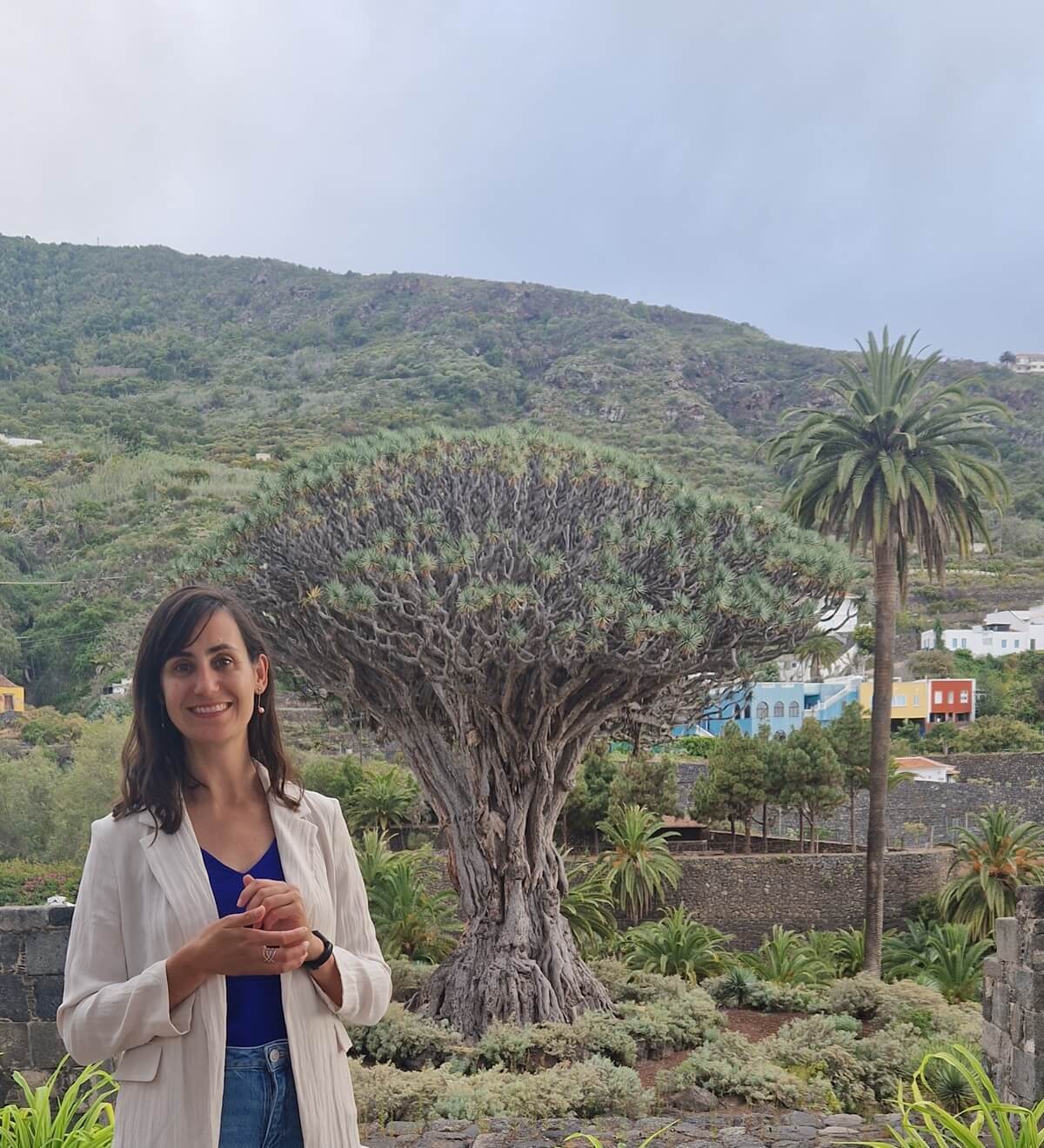
I have been an expat for over 12 years.
I enjoyed a nomadic life for 3 years.
I am an EFT tapping therapist.
I love anything related to self-development and mindset and truly believe that we are powerful and that the best investment we can make is in ourselves - creating space to get to know who we are, in a non-judgmental way, so that we can release what no longer serves us and enjoy life in a lighter, more present way.
Over the years, I explored different tools and approaches while learning from books, videos and podcasts. One of the techniques that personally helped me the most was EFT tapping.
At first, I used it for myself - to regulate emotions, process changes and navigate the ups and downs that naturally come with living abroad and from moving around. The more I practiced, the more benefits I could see in my life. It became something I felt genuinely passionate about. So much so that I decided to train professionally, so that I could share this technique with others too.
Today, I work with people who live abroad or move frequently - expats, nomads and travellers - supporting them as they navigate the emotional side of a mobile lifestyle.
Feeling grounded anywhere you are
When life is constantly changing around you, having a moment to pause and reconnect with yourself can be incredibly valuable.
Therapy offers that space - a place where you can process emotions, gain clarity and feel more grounded, wherever in the world you are.